Anesthesia Technology Department Students Undertake a Scientific Visit to Paky Hospital
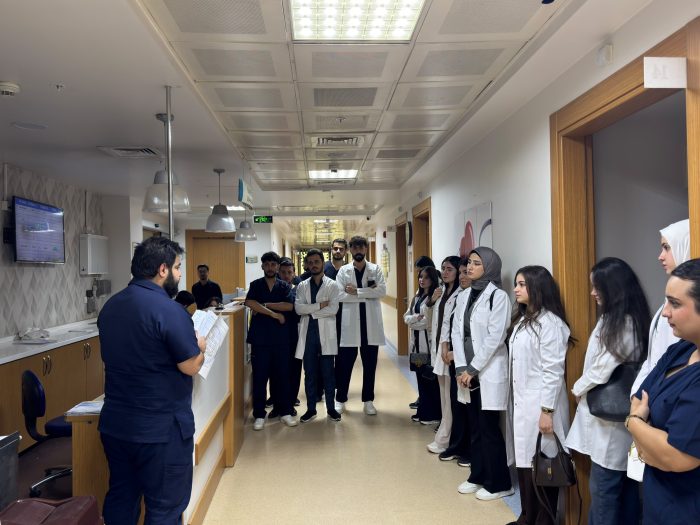
On Monday, October 12, 2026, the Department of Anesthesia Technology at Cihan University–Erbil organized a scientific field visit to Paky Hospital for third-year students.
The visit was supervised by Dr. Mahmood Jawdat Khayat, B.Med., M.B.Ch.B., a faculty member in the Department of Anesthesia Technology.
The university delegation was welcomed by Mr. Dilzar Karim Qadir, Head of Nursing at the hospital. He provided an introductory overview of the hospital’s functions, departments, and healthcare services before the scientific tour began.
In the Emergency Department, students were introduced to patient reception procedures, initial assessment protocols, and the importance of responding promptly to emergency situations. They also observed several devices used for patient assessment and monitoring, including the electrocardiogram (ECG) machine, which records the heart’s electrical activity; the vital signs monitor, which measures blood pressure, heart rate, oxygen saturation, and body temperature; and the defibrillator, which is used to manage certain cardiac arrhythmias and life-threatening cardiac emergencies.
In the Radiology Department, students learned about the role of medical imaging in identifying and evaluating medical conditions and supporting clinical decision-making.
They were introduced to the X-ray machine, which is commonly used to image bones and the chest and detect various medical conditions, as well as the ultrasound machine, which uses sound waves to produce images of internal organs and tissues through a non-invasive procedure.
In the Laboratory Department, students observed the basic procedures involved in blood sample collection, handling, and preparation for laboratory testing, including selected hormonal investigations.
They were also introduced to essential laboratory equipment, such as the centrifuge, which separates the components of blood samples; the biochemistry analyzer, which measures various biochemical parameters in blood; and the immunoassay analyzer, which is used to perform a range of hormonal and immunological tests.
From a pharmacological and clinical perspective, students received explanations about medications commonly used in medical practice, particularly analgesics and medications related to anesthesia.
The discussion emphasized the importance of understanding their clinical applications, appropriate dosages, and adherence to established medical guidelines. Students also became familiar with various medical instruments and supplies and learned about their roles in ensuring safe and effective patient care.