Cihan University – Erbil Organizes a Training Course on Empowering Educational Curricula to Serve Sustainable Development in the Age of Artificial Intelligence
Under the patronage of Prof. Dr. Amjad Saber Al-Dalawi, President of Cihan University – Erbil, the university organized a specialized training course on Thursday, November 26, 2026, titled ‘Empowering Educational Curricula to Serve Sustainable Development in the Age of Artificial Intelligence.
’ The training course, which was held in collaboration with the Scientific Association for Sustainable Educational Studies (SASES), brought together postgraduate degree holders, researchers, and curriculum developers in response to rapid digital transformations and the demands of sustainable development in the education sector.
Hosted at Cihan University – Erbil, the course began with a welcoming speech addressed to the participants, followed by scientific sessions that combined theoretical foundations with practical applications. Lecturer Dr. Ahmed Abd Aoun Abd Ali, Head of the Department of General Education, conducted the first session titled ‘Introduction to Artificial Intelligence in Education’, exploring the prospects of employing smart technologies to enhance the learning environment.
Next, Lecturer Dr. Khalid Fadhil Jassim, Head of the Department of Computer Science, presented the second session on ‘Engineering and Redesigning Academic Curricula’, in which he highlighted mechanisms for modernizing curricular structures to keep pace with digital advancements.
In the third session, Assistant Lecturer Omar Adel Mohammed Ali, Head of the Department of Radiological Imaging Techniques, discussed the Sustainable Development Goals (SDGs) and ways to integrate their concepts and values into the educational system.
Following a brief break, the sessions resumed with a focus on the ethical and instructional design dimensions of contemporary education. Assistant Professor Dr. Shahzad Ramadhan Hassan, a faculty member in the Department of General Education, presented the topic on ‘Ethics of Artificial Intelligence and Digital Sustainability,’ followed by Assistant Professor Dr. Laith Razzouqi Flaih, a faculty member in the Department of Computer Science, who delivered a lecture on ‘Designing Cross-Curricular Study Units.’ Focusing on practical and creative applications, Assistant Professor Dr. Reem Jaafar Ismail, a faculty member in the Department of Computer Science, offered a lecture titled ‘Creating Digital Content and Media.’ Finally, Assistant Lecturer Aliaa Asaad Mahdi, also from the Department of Computer Science, concluded the scientific program with a lecture titled ‘Formulating Academic Activities and Lesson Plans.’
In the closing ceremony, Prof. Dr. Ayad Hazim Hassan, Vice President for Scientific Affairs, delivered a speech emphasizing Cihan University – Erbil’s ongoing commitment to supporting academic development, promoting continuous training, and keeping abreast of the latest scientific and technological advancements in higher education. This was followed by remarks from Prof. Dr. Ali Khatiya, President of the Scientific Association for Sustainable Educational Studies, who commended the fruitful scientific collaboration with the university and emphasized the significance of the course outcomes in advancing the educational process.
Subsequently, the recognition and certificate distribution ceremony was held. Prof. Dr. Ali Khatiya awarded certificates to the presenters in appreciation of their scientific contributions. He also presented a certificate of appreciation to Prof. Dr. Amjad Saber Al-Dalawi, President of Cihan University – Erbil, which was received on his behalf by Prof. Dr. Ayad Hazim Hassan. In addition, certificates of appreciation were awarded to Prof. Dr. Ayad Hazim Hassan and Dr. Ahmed Abd Aoun in recognition of their outstanding efforts in organizing and ensuring the success of the course.
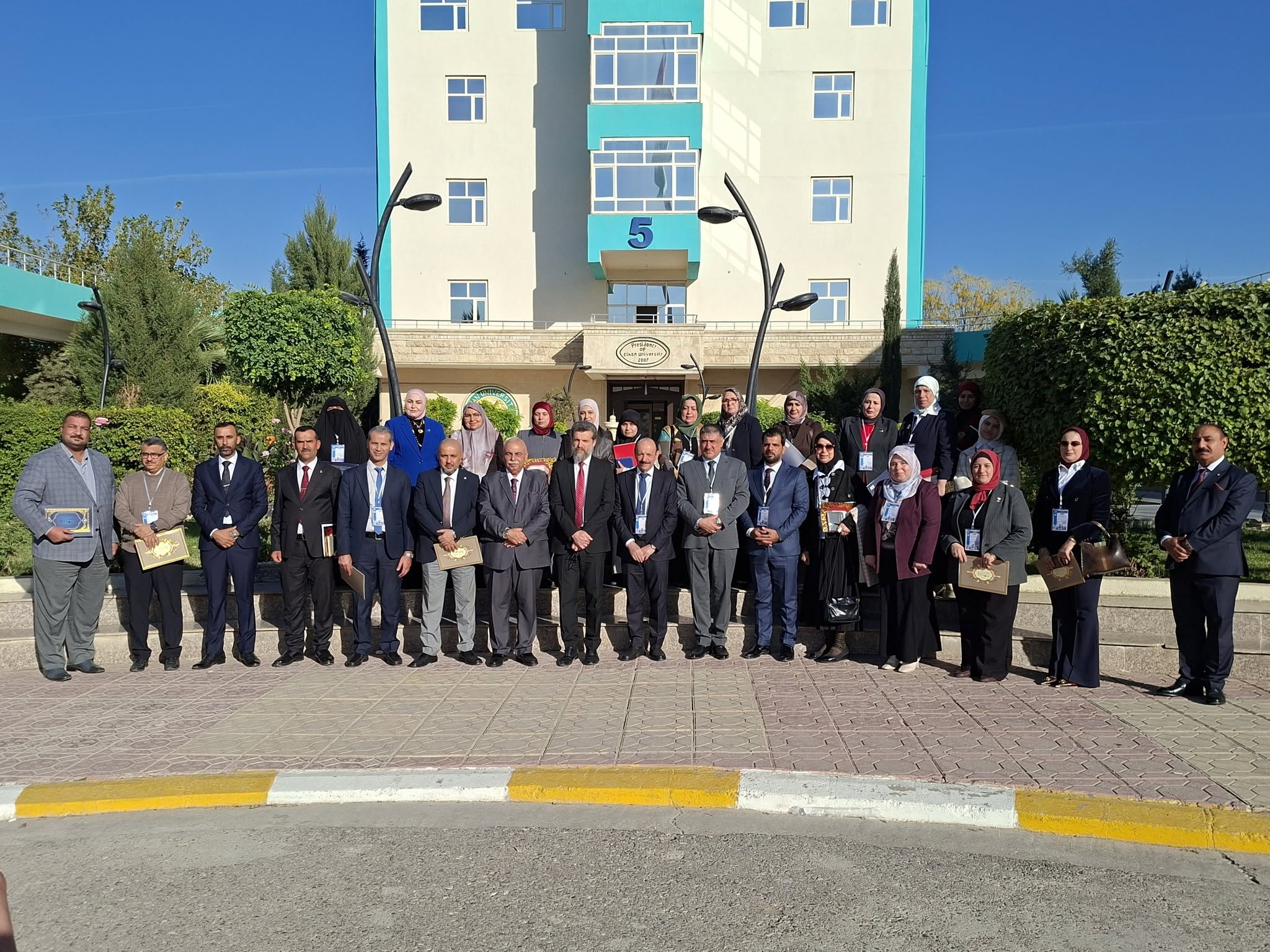
In turn, Prof. Dr. Ayad Hazim Hassan distributed certificates of participation to the attendees. The event concluded with a group photograph commemorating this productive academic collaboration.