On Monday, November 9, 2026, the Department of Community Health Nursing at Cihan University–Erbil launched the Clinical Skills Enhancement Training Program for second-stage midwifery students from Erbil Medical Institute at the university’s Maternity Laboratory.
The training was conducted under the supervision of Assist. Prof. Dr. Zean Fatehallah Zefenkey, Head of the Department of Community Health Nursing, with the participation of Assist. Prof. Dr. Thamari Thankam.
During the opening session, Assist. Prof. Dr. Zean Fatehallah Zefenkey emphasized the importance of practical training in developing students’ clinical skills and strengthening their professional confidence. She highlighted the program’s aim of bridging the gap between theoretical knowledge and clinical practice while promoting safe, high-quality maternal healthcare.
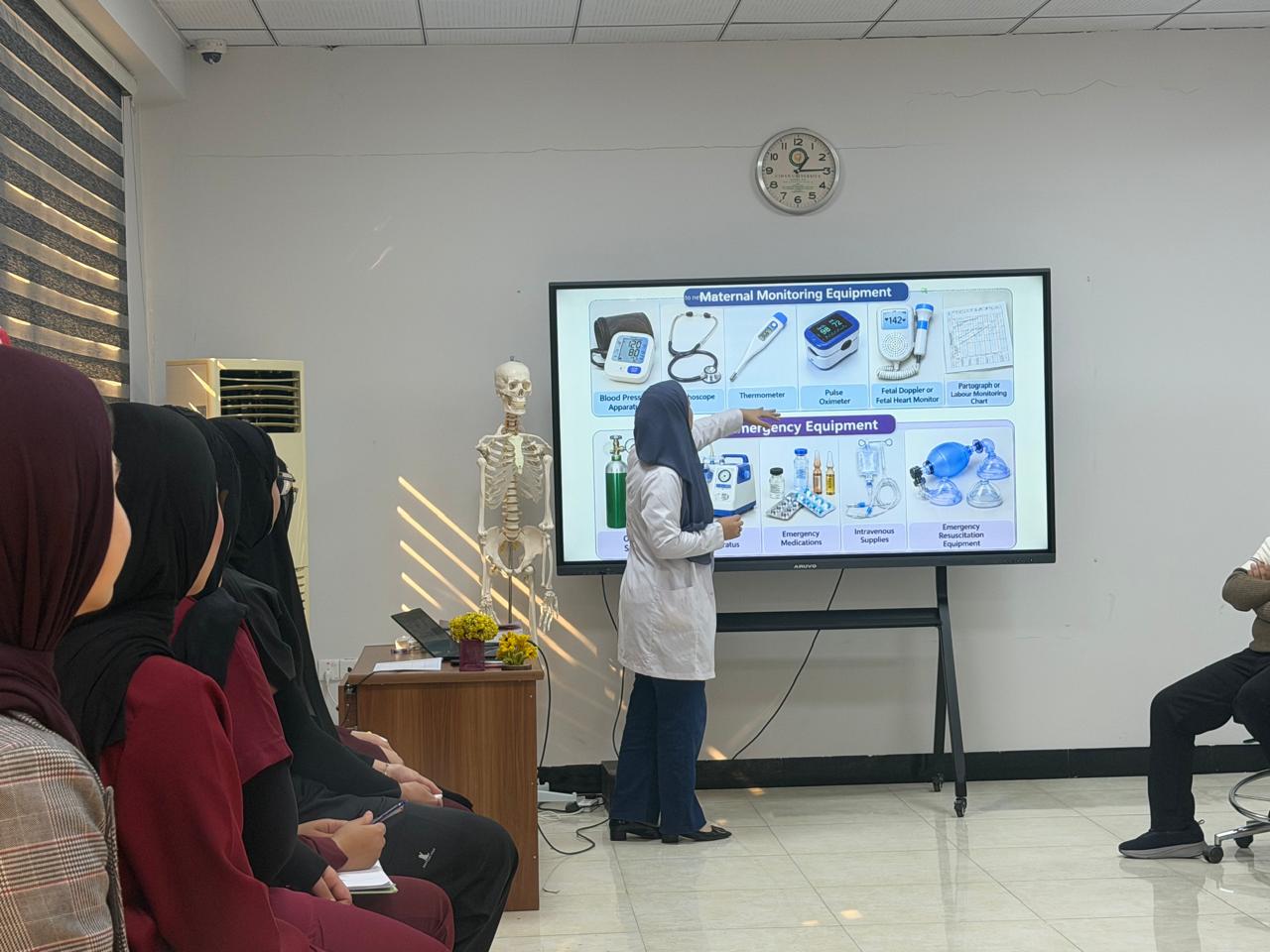
The first day of training focused on preparation for normal childbirth and included a series of theoretical explanations and practical demonstrations delivered by the participating academic and laboratory staff.
Assist. Prof. Dr. Thamari Thankam introduced the essential requirements for preparing the delivery room and properly arranging obstetric instruments. She emphasized the importance of maintaining an organized, safe, and well-equipped clinical environment during childbirth.
Lab Assistant Ms. Kawthar Shahab explained the stages of labour and the roles and responsibilities of healthcare professionals during childbirth. She also demonstrated essential maternal and fetal assessment procedures, including the assessment of maternal vital signs and fetal heart rate monitoring. She highlighted the importance of these procedures in monitoring maternal and fetal well-being and ensuring safe childbirth.
Lab Assistant Ms. Baran Jumaa conducted practical demonstrations of per vaginal examination and fundal palpation, explaining their clinical significance in assessing maternal health and monitoring the progress of labour.
Throughout the training sessions, students actively participated in discussions and return demonstrations, enabling them to reinforce their theoretical knowledge, develop essential clinical skills, and gain greater confidence in performing maternal healthcare procedures.
The opening day established a strong foundation for the subsequent training sessions, highlighting the importance of patient safety, effective teamwork, and the delivery of high-quality maternal healthcare.