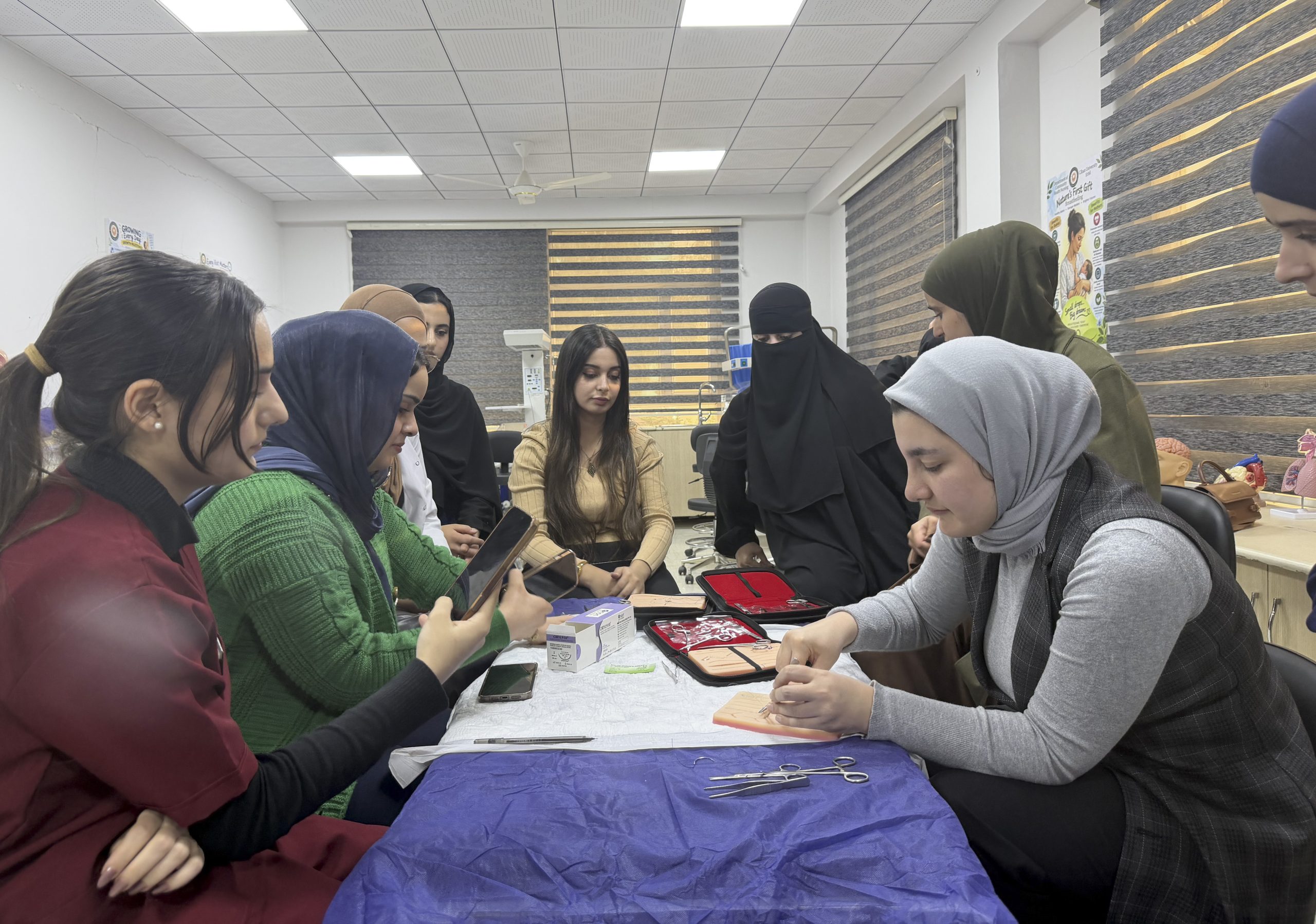
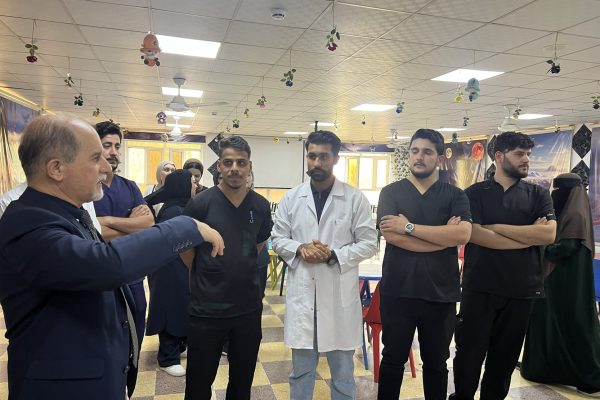
From November 17 to 19, 2026, the Department of Community Health Nursing organized a three-day clinical skills training program for second-stage students from the Midwifery Department at Erbil Institute of Technical Administration. The program was conducted under the supervision of Assistant. Prof. Dr. Zean Fatehallah Zefenkey, Head of the Department of Community Health Nursing.
Throughout the program, students attended educational sessions and practical demonstrations delivered by Ms. Baran Jumaa, MSc in Maternity Nursing, and Ms. Kawsar Shahab, MSc in Midwifery Science, both academic staff members of the Department of Community Health Nursing.
On the first day, November 17, Ms. Baran Jumaa and Ms. Kawsar Shahab introduced students to essential clinical skills related to maternal healthcare and midwifery practice. Ms. Baran Jumaa covered fundamental aspects of maternity nursing, including maternal assessment, patient preparation, and essential nursing considerations during childbirth. Meanwhile, Ms. Kawsar Shahab explained basic midwifery procedures, emphasizing maternal safety, clinical preparation, and appropriate care during labour and delivery. Both instructors combined theoretical explanations with practical demonstrations to strengthen students’ understanding of essential maternal healthcare procedures.
On the second day, November 18, Ms. Kawsar Shahab delivered a practical session on preparation for labour and delivery. She explained the essential steps involved in preparing mothers for childbirth, organizing the delivery room, and performing basic clinical procedures related to labour and delivery. Meanwhile, Ms. Baran Jumaa addressed key aspects of maternity nursing care, including monitoring maternal vital signs, assessing the mother’s condition during labour, implementing infection prevention measures, and providing appropriate nursing support throughout childbirth. Both sessions incorporated practical demonstrations to reinforce students’ understanding of safe maternal care.
On the third day, November 19, the training covered urinary catheterization, perineal trauma, episiotomy, and suturing techniques, with each instructor addressing specific clinical topics.
Ms. Baran Jumaa delivered a theoretical and practical session on urinary catheterization and related procedures. She explained the principles and indications of urinary catheterization, demonstrated Foley catheter insertion, and discussed essential infection prevention measures. She also demonstrated urine specimen collection through a urinary catheter and bladder irrigation, emphasizing patient safety and appropriate clinical techniques.
Ms. Kawsar Shahab conducted a session on perineal trauma, episiotomy, and suturing techniques. She explained the definition, types, and classification of perineal trauma, along with the indications for and different types of episiotomy. She also demonstrated episiotomy repair and commonly used suturing techniques, highlighting essential post-procedure care to prevent complications and promote maternal recovery.
Throughout the three-day program, students actively participated in practical demonstrations and interactive discussions. These activities enabled them to connect theoretical knowledge with clinical practice, develop their procedural skills, and strengthen their confidence in delivering safe, evidence-based midwifery care.
At the end of the program, appreciation was extended to the participating students and academic instructors for their active engagement and valuable contributions to the success of the training program.