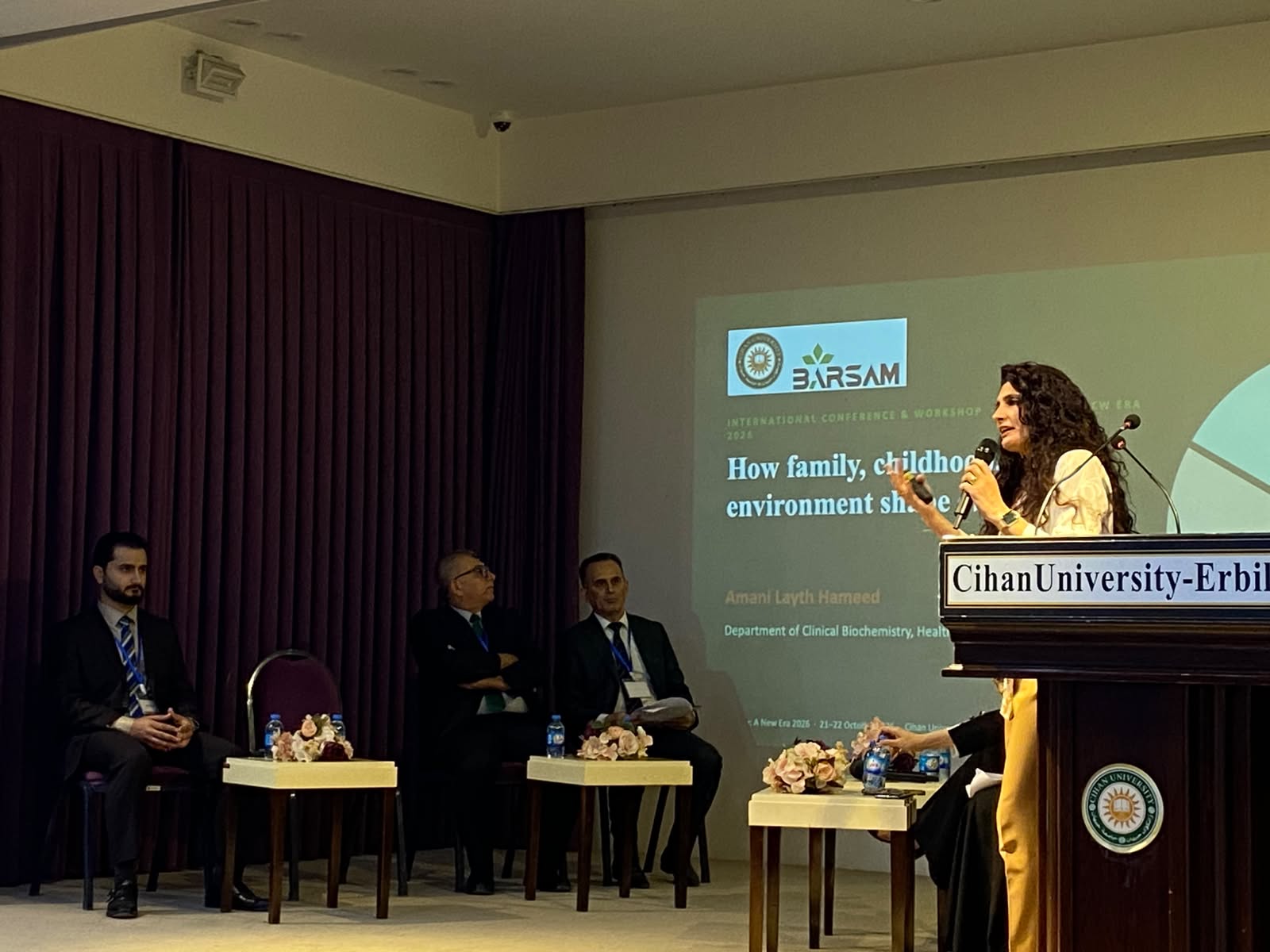
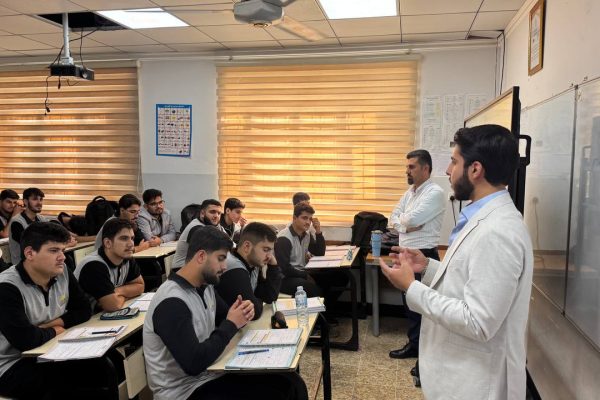
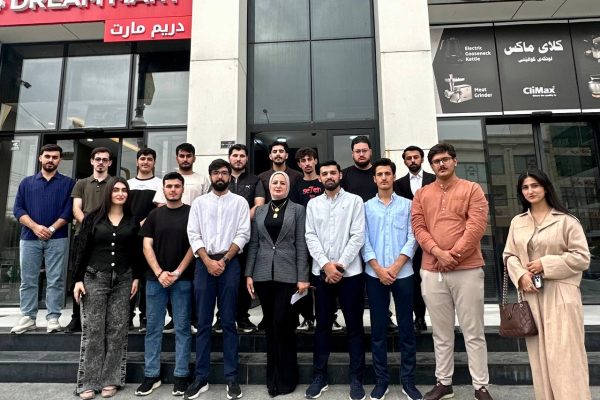
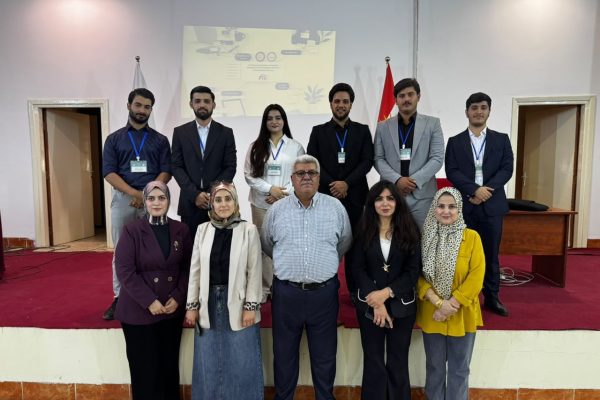
As part of the International Conference on Obesity: A New Era 2026 – Prevention, Treatment and Multidisciplinary Care, which was organized by Cihan University-Erbil on Wednesday, October 21, 2026, in partnership with Barsam International Development and Innovation Company, a specialized panel discussion titled ‘Obesity: A Multidisciplinary Approach to Prevention and Management’ was held at the University’s Conference Hall. It brought together academics, researchers, and healthcare specialists from different scientific and medical backgrounds to address the complex challenges associated with obesity and examine emerging approaches to its prevention, treatment, and long-term management.
The discussion began with Dr. Amani Layth Hameed, from the College of Health Sciences at Hawler Medical University, who presented ‘Obesity and Self-Confidence: The Influence of Childhood, Family, Society, and the Environment.’ Her presentation focused on the psychological and social dimensions of obesity, highlighting how childhood experiences, family relationships, social attitudes, and environmental factors can influence body image, self-confidence, and eating behaviors. The topic also emphasized the importance of psychological support, positive family involvement, and supportive social environments in addressing obesity and promoting healthier lifestyles.
The scientific discussions continued with Asst. Prof. Dr. Badr Qader Ismael Surchi, from the Department of Biology, College of Science, Salahaddin University-Erbil, who presented ‘From Evidence to Practice: A Personal 51 kg Weight Loss Journey with Clinical Herbal Medicine.’ The presentation explored a personal weight-loss experience involving clinical herbal medicine, providing an opportunity to examine the relationship between scientific knowledge and practical approaches to weight management. The topic also raised important considerations regarding the potential role of herbal interventions, individual lifestyle changes, and the need for scientific evaluation when assessing the safety and effectiveness of weight-management strategies.
Another presentation was delivered by Dr. Samira Hosseini, Food and Nutrition Policy Specialist at Barsam International Development and Innovation Company, titled ‘The Evolution of Obesity: Global Trends, Emerging Challenges and Policy Responses’. The presentation focused on obesity as an expanding global public health concern, highlighting changing dietary patterns, environmental influences, and socioeconomic factors contributing to its increasing prevalence. It also explored the importance of effective nutrition policies, public health initiatives, and coordinated institutional efforts in addressing obesity-related challenges and promoting healthier food environments.
The panel also featured Asst. Prof. Dr. Rebaz Tahir, Head of the Clinical Research Center at the Kurdistan Higher Council of Medical Specialties, who presented ‘Anti-Obesity Injections: Shaping the Future of Obesity Treatment’. The presentation focused on the recent developments in pharmacological approaches to obesity management, particularly the growing clinical use of injectable anti-obesity medications. The topic highlighted their potential role in weight reduction and metabolic improvement, while addressing the importance of appropriate patient selection, medical supervision, monitoring of possible adverse effects, and integration with nutritional and lifestyle interventions for sustainable treatment outcomes.
Addressing the nutritional aspects of surgical obesity management, Dr. Behnaz Shahrokhi Sahneh, from the Department of Nutrition and Dietetics at Cihan University-Erbil, presented ‘The Nutritional Challenge of Metabolic Surgery: Rethinking Care Before, During, and After’. The presentation highlighted the importance of nutritional assessment and management throughout the surgical treatment process. Particular attention was given to identifying nutritional deficiencies, preparing patients before surgery, providing suitable dietary guidance during recovery, and ensuring continuous nutritional monitoring to support long-term health and reduce postoperative complications.
Concluding the individual panel presentations, Assistant Lecturer Ahmed Nabaz from the Department of Nutrition and Dietetics at Cihan University-Erbil presented ‘Beyond the Diet: The Role of the Clinical Nutritionist in Obesity Prevention, Treatment, and Long-Term Care.’ The presentation emphasized the broader responsibilities of clinical nutritionists in obesity management beyond simply preparing dietary plans. It explored their role in nutritional assessment, individualized dietary interventions, patient education, behavioral support, and continuous follow-up. The topic also highlighted the importance of collaboration between nutritionists, physicians, surgeons, and other healthcare professionals to provide comprehensive and patient-centered care.
Following the presentations, the scientific program included a panel discussion and question-and-answer session, providing an opportunity to examine the different perspectives presented and their relevance to clinical practice and public health. The panel addressed obesity from psychological, social, nutritional, medical, and policy-related perspectives, reinforcing the importance of coordinated approaches to prevention and treatment.
The panel discussion represented an important component of the conference’s scientific activities, highlighting the need to integrate research findings, clinical expertise, nutrition education, and healthcare policies into effective obesity management strategies. It also reflected the conference’s commitment to strengthening scientific collaboration, promoting evidence-based healthcare practices, and supporting multidisciplinary efforts to improve obesity prevention, treatment, and long-term patient care in the Kurdistan Region, Iraq, and beyond.