
Medical Laboratory Analysis Department Students Visit Medline Laboratory
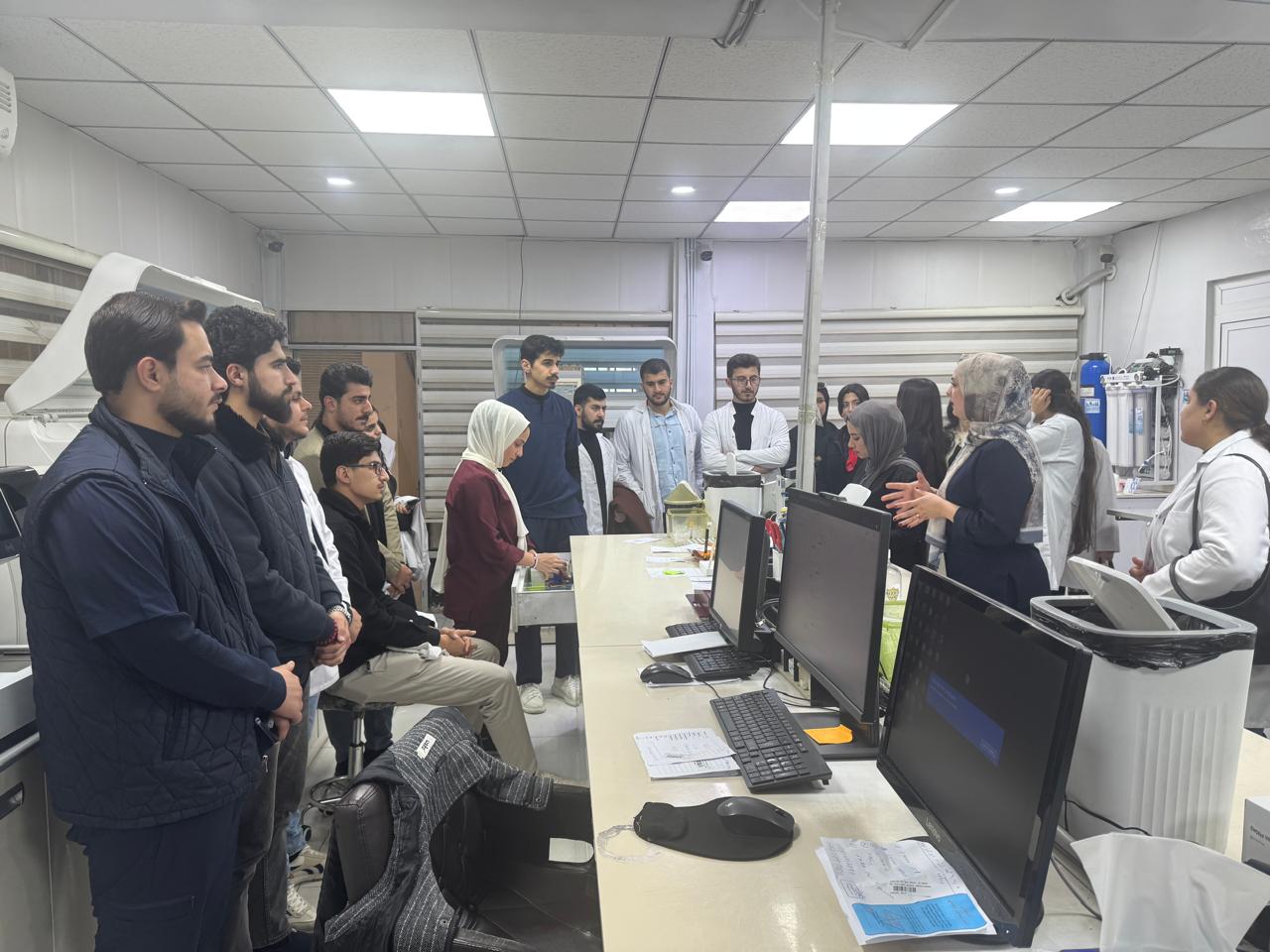
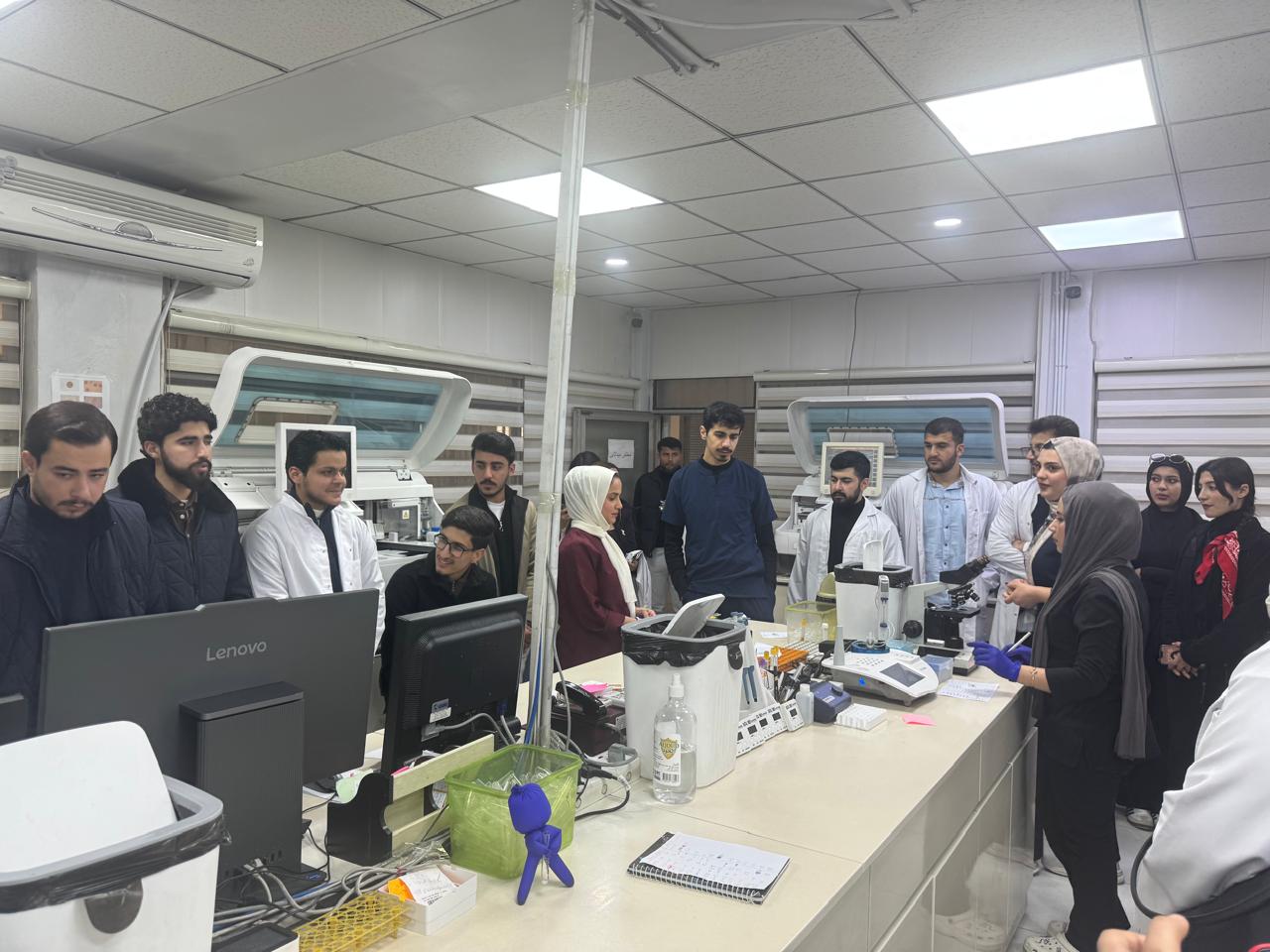
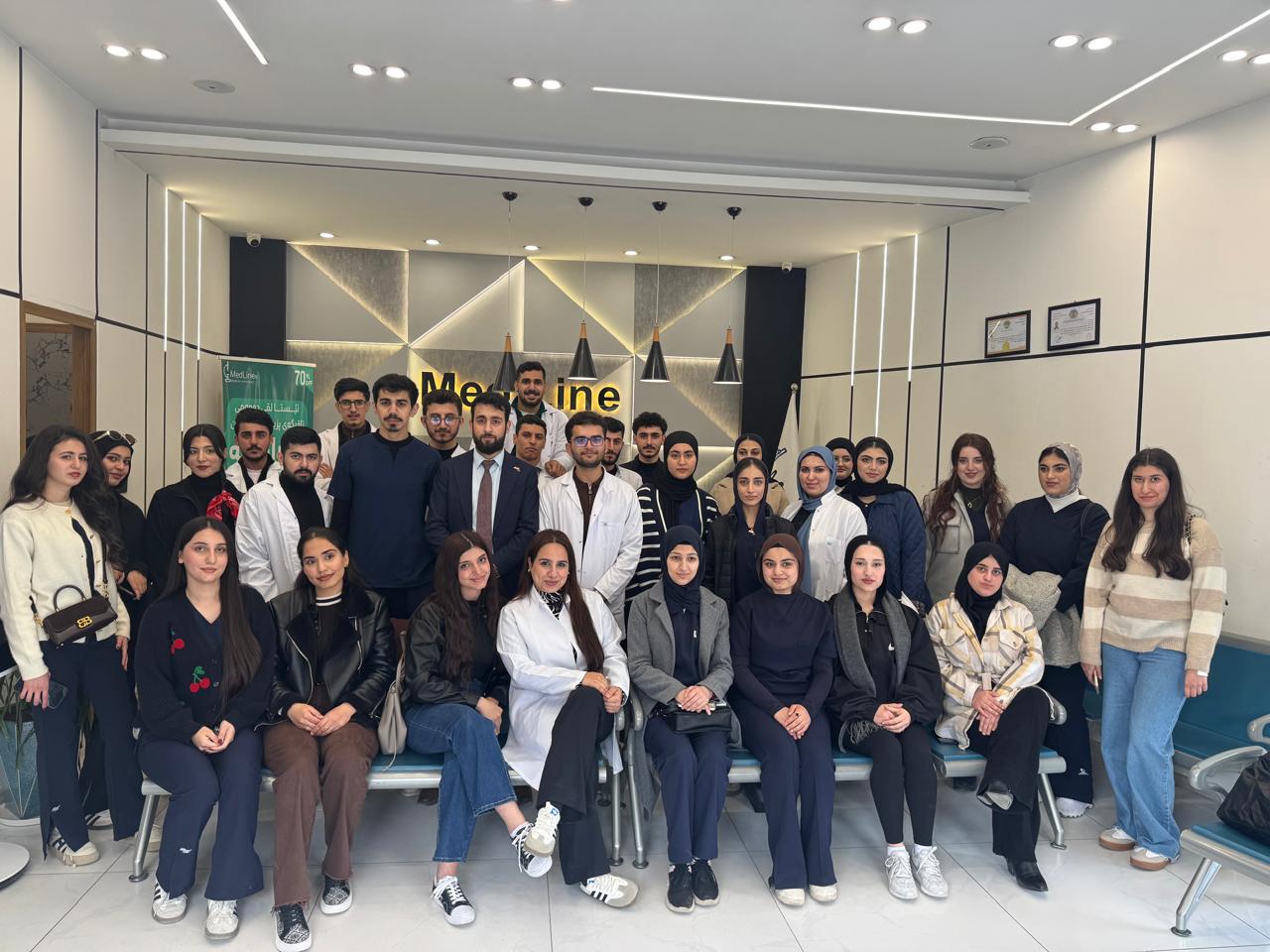
Second-year students from the Medical Laboratory Analysis Department at Cihan University–Erbil visited Medline Laboratory on Doctors Street on Thursday, 5 February 2026, under the supervision of Assistant Lecturer Daban Kanbi Rasheed. The students were received by Mr. Hemdad Mustafa Hamza, and the visit was organized to introduce them to a modern laboratory environment and the organization of procedures before, during, and after testing.
The visit began with an explanation by the laboratory staff about the phlebotomy (blood collection) section and the workflow for receiving patients. Key steps were highlighted, including accurate patient identification, selecting the appropriate collection tubes, and the importance of correct sample labeling and coding to prevent errors. The staff also explained the system used to enter patient information, noting that it is a globally recognized system that organizes patient data and links it to the specimen from registration until results are released, thereby improving traceability and supporting faster, safer workflow management.
Furthermore, students were informed that the laboratory holds the RIQAS international laboratory quality certification, reflecting its commitment to internationally recognized quality standards. In particular, the role of the laboratory’s quality control unit was emphasized, as it monitors analyzer performance and result reliability daily before reports are approved. The discussion highlighted that quality is not limited to the analyzer itself; it also includes proper specimen handling, safety practices, and reviewing results within approved reference ranges before issuing the final report.
In addition, students were introduced to one of the laboratory’s latest analyzers, Cobas Pure, which is supported by artificial intelligence technologies. The staff explained how these technologies can enhance workflow efficiency by supporting organized operational steps, reducing errors, and providing smart alerts when follow-up or review is needed. It was also noted that integrating AI features into modern laboratory systems can improve speed and consistency, while final result validation remains dependent on professional review and adherence to the laboratory’s approved quality procedures.